

Best Surge Protector Power Strips: How Surge Protected Extension Leads Protect Electronics from Lightning & Surges (2026)
Content Menu
● Why Surge Protected Extension Leads Matter
● How Lightning and Power Surges Reach Your Outlets
● How Surge Protector Power Strips Actually Work
● MOV, TVS and Thermal Protection Explained
● Internal Surges: The Hidden Daily Threat
● SPD Types and Where a Power Strip Fits
● Why Grounding Is Critical for Surge Protected Power Strips
● How to Choose the Best Surge Protector Power Strip
What is a Surge Protector Power Strip?
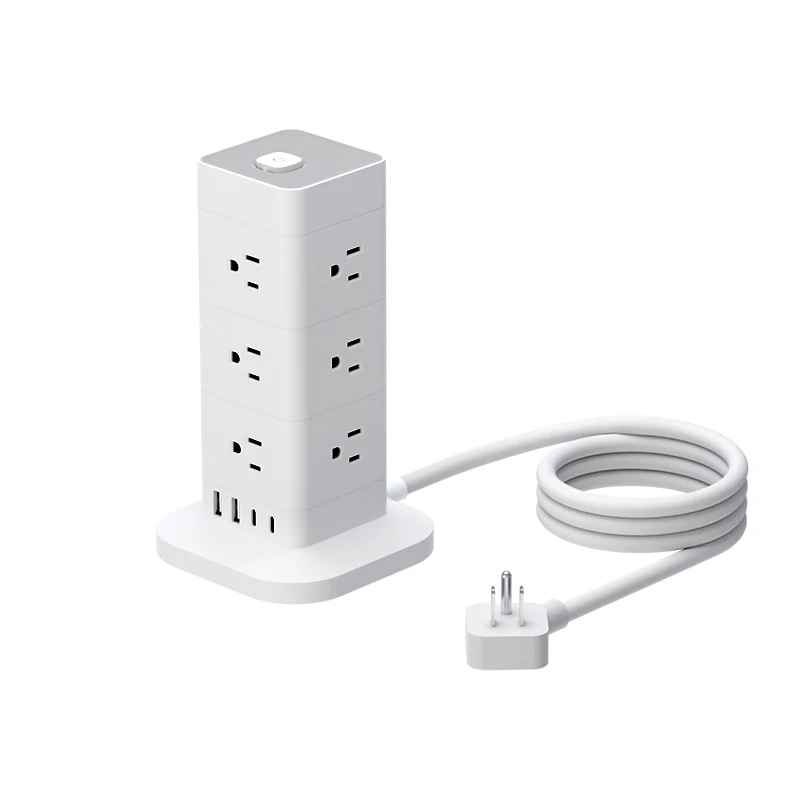
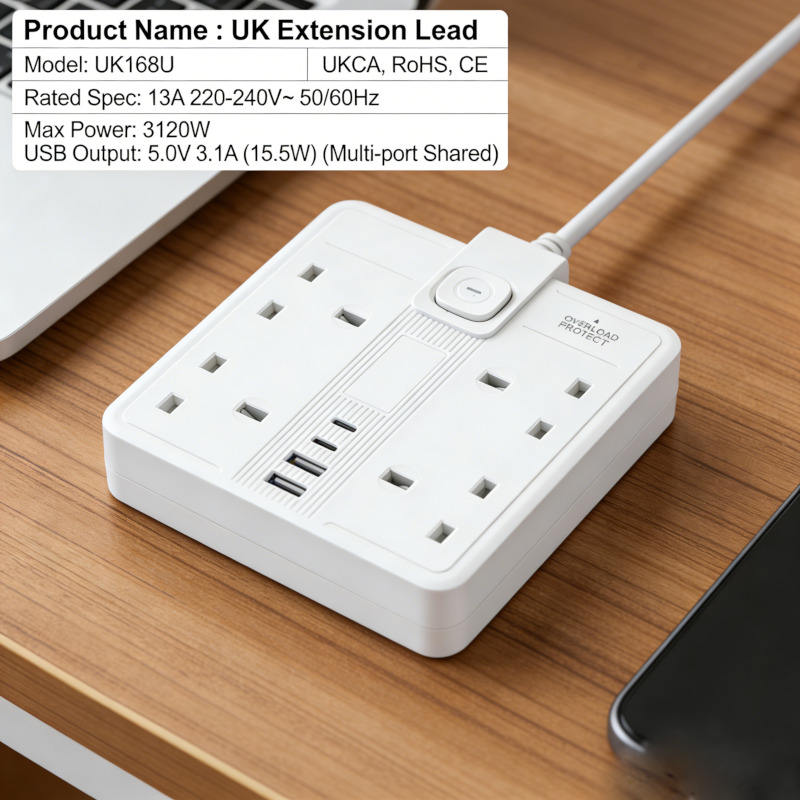
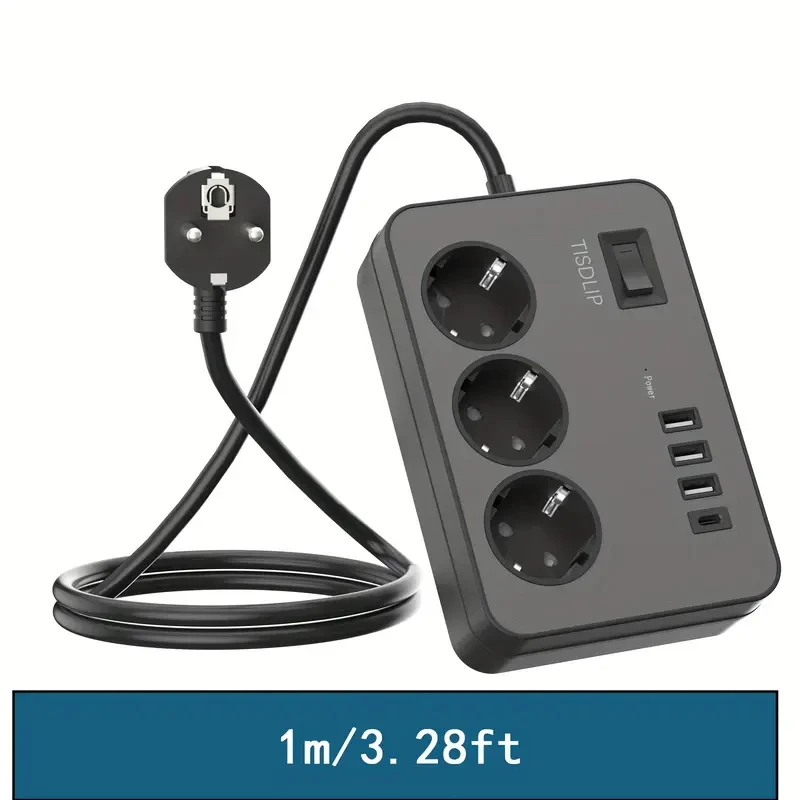
A surge protector power strip (also called a surge protected extension lead) is a multi-outlet device that contains Metal Oxide Varistors (MOVs) and related circuits. It clamps dangerous voltage spikes from lightning or internal switching and diverts excess energy safely to ground before it reaches your electronics.
What Causes Power Surges?
Power surges are sudden voltage spikes caused by nearby lightning, utility switching, or the on/off cycling of high-power appliances such as air conditioners and refrigerators.
What is a Lightning Surge?
A lightning surge is a high-voltage transient induced on power lines by the electromagnetic field of a nearby strike, often reaching thousands of volts even without a direct hit on the building.
How Does an MOV Work in a Power Strip?
An MOV stays high-resistance during normal voltage. When a surge exceeds its threshold, it switches to low resistance in nanoseconds, clamping the voltage and diverting excess current to ground.
Introduction
Most people only think about surge protection when a thunderstorm arrives. In reality, the devices that sit between your wall outlet and your valuable electronics — the surge protector power strip or surge protected extension lead — are the last and most important line of defence for the majority of home and office equipment.
As an electrical manufacturing engineer with over 20 years of experience designing OEM power distribution products, power strips, and custom plug inserts for global markets (IEC, UL and VDE certified), I have examined thousands of circuit boards destroyed by voltage spikes. The difference between a plain multi-outlet strip and a properly engineered surge-protected extension lead is the difference between irreversible damage and continued reliable operation.
This guide focuses specifically on surge protector power strips and extension leads: how they work, what specifications actually matter, and how to select one that genuinely protects your electronics.

Why Surge Protected Extension Leads Matter
Modern electronics contain extremely sensitive semiconductor components. A voltage spike of only a few hundred volts above normal can punch microscopic holes through insulation layers, corrupt firmware, or cause cumulative degradation that shortens product life.
A quality surge protected extension lead performs three critical jobs at the point of use:
- Clamps transient overvoltage to a safe level
- Diverts excess energy to ground
- Often adds filtering, over-current and thermal protection
Unlike a whole-house SPD (which is essential for high-energy events), the point-of-use surge protector power strip is the device that sits centimetres from the equipment it protects. Its response speed and clamping performance directly determine how much residual energy reaches the sensitive circuits.

How Lightning and Power Surges Reach Your Outlets
Lightning does not need to strike your house to damage equipment. A nearby strike creates a powerful electromagnetic pulse that induces high-voltage transients on power lines, coaxial cables and network wiring. These transients travel into the building and appear at wall outlets as short-duration spikes that can exceed 6,000 V.
Even without lightning, the electrical grid and appliances inside the building constantly generate smaller but frequent surges. Both types of events reach the equipment through the same path: the power strip or extension lead plugged into the wall.
How Surge Protector Power Strips Actually Work
A genuine surge protected extension lead contains one or more Metal Oxide Varistors (MOVs) connected between Line, Neutral and Ground.
Under normal voltage the MOV acts as an open circuit. When voltage rises above its designed threshold, the MOV resistance collapses within nanoseconds. Excess current is diverted to the protective earth conductor and the voltage that reaches the outlets is limited to a safe clamping level.
Additional components commonly found in better designs include:
- Thermal fuses that disconnect a failed MOV
- TVS diodes for faster fine clamping
- EMI/RFI filters for noise reduction
- Over-current and short-circuit protection
- Status LEDs that show grounding and remaining protection capacity
MOV, TVS and Thermal Protection Explained
MOV (Metal Oxide Varistor)
The workhorse of almost every power-strip surge protector. High energy absorption capability and nanosecond response make it ideal for mains protection. MOVs degrade slightly with each surge event.
TVS (Transient Voltage Suppressor) diodes
Faster and more precise than MOVs but handle less energy. Often used as a secondary stage or on signal lines.
Thermal protection
A critical safety feature. When an MOV absorbs enough energy to overheat or fail short, a thermal fuse opens the circuit, preventing fire risk and clearly indicating that the unit must be replaced.
Cheap power strips frequently omit proper thermal fusing and status indication, which is why they can fail silently or create hazards.
Internal Surges: The Hidden Daily Threat
Research from organisations such as the Electrical Safety Foundation International shows that 60–80 % of all power surges originate inside the building. Every time an air-conditioner compressor, refrigerator, vacuum cleaner or power tool switches off, the collapsing magnetic field produces an inductive voltage spike.
These micro-surges occur many times a day. Over months and years they cause the same cumulative damage as external lightning events. A surge-protected extension lead continuously absorbs these everyday spikes, significantly extending the life of connected equipment.
SPD Types and Where a Power Strip Fits
According to IEC 61643-11:
- Type 1 – Installed at the main service entrance to handle high-energy lightning current.
- Type 2 – Installed at distribution panels for residual and switching surges.
- Type 3 – Point-of-use devices such as surge protector power strips and extension leads. They provide the final, fine voltage clamping closest to the equipment.
A Type 3 surge protected extension lead is not a substitute for Type 1/2 protection at the panel, but it is the essential last stage for sensitive electronics. The most reliable installations combine both.
Why Grounding Is Critical for Surge Protected Extension lead
Almost all effective surge diversion relies on a low-impedance path to protective earth. Without a proper ground connection, the MOV cannot safely dump excess energy. Residual voltage remains higher and protection performance drops sharply. Always choose a surge protector power strip with a ground indicator LED and verify that the wall outlet itself is correctly grounded.
Real Engineering Cases
Case 1 – Office Workstations
A company experienced repeated hard-drive and power-supply failures on desktop computers after storms. Investigation found ordinary multi-outlet strips in use. After replacement with properly rated surge-protected extension leads (adequate joule rating, thermal protection and status LEDs), surge-related failures essentially stopped.
Case 2 – Home Theatre and Network Equipment
A residential installation suffered intermittent router lock-ups and television power-supply failures. Logging showed frequent internal surges from HVAC equipment. Installation of filtered surge protector power strips with MOV + EMI filtering eliminated the recurring problems.
How to Choose the Best power strip surge protector
Focus on these specifications when selecting a surge protected extension lead:
- Joule Rating — Minimum 900–1 000 J for general use; 2 000 J or higher for high-value electronics.
- Clamping Voltage (VPR) — Lower is better (ideally 330–500 V range).
- Response Time — Nanosecond range (typically < 25 ns).
- Ground & Protected LEDs — Essential for confirming proper grounding and remaining capacity.
- Thermal Protection — Must disconnect a failed MOV safely.
- Certifications — UL 1449, IEC 61643-11 where applicable, and local safety marks (BS 1363, CE, etc.).
- Housing Material — UL 94 V-0 flame-retardant polycarbonate.
- Cable Gauge and Length — Sufficient cross-section for the rated current.
- Warranty and Failure Indication — Clear visual indication when protection is exhausted.
Avoid products that only claim "surge protection" without listing joule rating, clamping voltage or certifications.
Common Mistakes to Avoid
- Using a plain multi-outlet strip and assuming it offers protection.
- Daisy-chaining one surge protector into another (violates codes and reduces performance).
- Ignoring the status LED after a major storm.
- Choosing the cheapest unit based only on number of outlets.
- Operating a surge-protected extension lead in an ungrounded outlet.
Frequently Asked Questions
Do surge protectors wear out?
Yes. MOVs degrade with each surge. Replace the unit when the "Protected" LED goes out.
How long do surge protector power strips last?
Typically 3–5 years under normal conditions, or less in high-surge environments. Monitor the indicator light.
Can a surge protected extension lead stop lightning damage?
It can handle residual and induced surges effectively. A direct high-energy strike requires coordinated Type 1/2 protection at the panel plus a Type 3 power strip.
Can I plug one surge protector into another?
No. This practice is unsafe and reduces protection effectiveness.
What is the difference between a power strip and a surge protector power strip?
A standard power strip only multiplies outlets. A surge protector power strip contains MOVs and related circuitry designed to clamp voltage spikes.
What does joule rating mean?
It indicates the total energy the device can absorb before its protective components are depleted. Higher ratings generally provide longer service life under repeated surges.
Do I need a surge protector if I have whole-house protection?
Yes. Whole-house SPDs handle high-energy events; point-of-use surge protected extension leads provide the final fine clamping and protection against internal surges.
Why do cheap power strips fail to protect properly?
They often use undersized MOVs, lack thermal fusing, omit status indicators, and may have inadequate grounding paths.
Does a surge protector work without ground?
Only partial protection is possible. Full performance and safety require a functional earth connection.
How often should I replace my surge protected extension lead?
Replace it when the protection indicator fails, after a known major surge, or every 3–5 years as preventive maintenance.
Conclusion
A well-designed surge protector power strip or surge protected extension lead is one of the most cost-effective ways to protect modern electronics from both lightning-induced and everyday internal power surges.
By understanding joule rating, clamping voltage, response time, grounding integrity and the importance of thermal protection and status indicators, you can select a device that genuinely performs rather than merely multiplies outlets.
When combined with proper upstream protection where available, a quality Type 3 surge-protected extension lead forms the critical final barrier that keeps sensitive equipment safe for years.



 Email
Email