


Content Menu
● 1. Decoding the Anatomy: What Is a NEMA 5-15P to C13 Power Cord?
>> The IEC 60320 C13 Connector
>> Why It Dominates IT Infrastructure
● 2. Enterprise & Consumer Deployments: What Devices Use a C13 Power Cord?
● 3. The Technical Core: 18AWG vs. 16AWG vs. 14AWG Wire Gauges
>> 16AWG Heavy Duty Power Cord
>> Engineering Reference Matrix
● 4. Troubleshooting & Safety: Diagnosing Thermal and Mechanical Failures
>> Issue 1: Why Is My C13 Power Cord Getting Hot to the Touch?
>> Issue 2: Can I Use a 10A C13 Cord for an Enterprise Server?
>> Issue 3: Why Does My Power Cord Keep Falling Out of the Server?
● 5. Compliance & Certification: UL Listed vs. Non-Certified Power Cords
>> The Critical Role of UL Listing
>> Material Safety and Jacket Classifications: SJT vs. SVT
● 6. Cable Management Optimization: Selecting the Perfect Length
>> The Pitfalls of Excess Cable Slack
>> Optimal Application Breakdown
● 7. B2B Sourcing Guide: Custom NEMA 5-15P to C13 Manufacturing Solutions
>> Key OEM/ODM Customization Parameters
>> Selecting a Commercial Manufacturer
● 8. Frequently Asked Questions (FAQ)
>> What is the difference between C13 and C15 connectors?
>> Can I use a C13 power cord for a high-resolution monitor?
>> Is an 18AWG cord sufficient for a high-end gaming PC?
>> What is the absolute maximum current rating for a standard NEMA 5-15P plug?
>> Are all C13 power cords manufactured with identical copper interiors?
>> What are the main benefits of a locking IEC C13 connector?
>> What specific certifications are mandatory for importing power cords into the United States?
● 9. Conclusion & Actionable Sourcing Insights
>> ???? Optimize Your Enterprise Power Infrastructure
How to Choose NEMA 5-15P to C13 Power Cords: 16AWG vs 18AWG Guide
When a critical server goes offline, a workstation abruptly shuts down, or a data center manager faces a tight deployment schedule, the culprit is often the most overlooked component in the infrastructure: the power cable.
Choosing the correct NEMA 5-15P to C13 power cord is not just about making a physical connection; it directly impacts operational uptime, thermal efficiency, and regulatory compliance. Whether you are replacing a lost computer power cord, staging an enterprise server power cable, or provisioning high-density UPS power cables, understanding the nuances of wire gauge, current ratings, and safety certifications is essential.
As an industry expert specializing in power distribution architecture, I have seen firsthand how incorrect cable selection leads to catastrophic equipment damage and costly downtime. This comprehensive technical guide breaks down everything infrastructure managers, IT procurement professionals, and system administrators need to know when sourcing enterprise-grade IEC C13 power cords.
1. Decoding the Anatomy: What Is a NEMA 5-15P to C13 Power Cord?
To understand why this specific cable assembly is the backbone of modern North American IT infrastructure, we must analyze its standard components as defined by the National Electrical Manufacturers Association (NEMA) and the International Electrotechnical Commission (IEC).
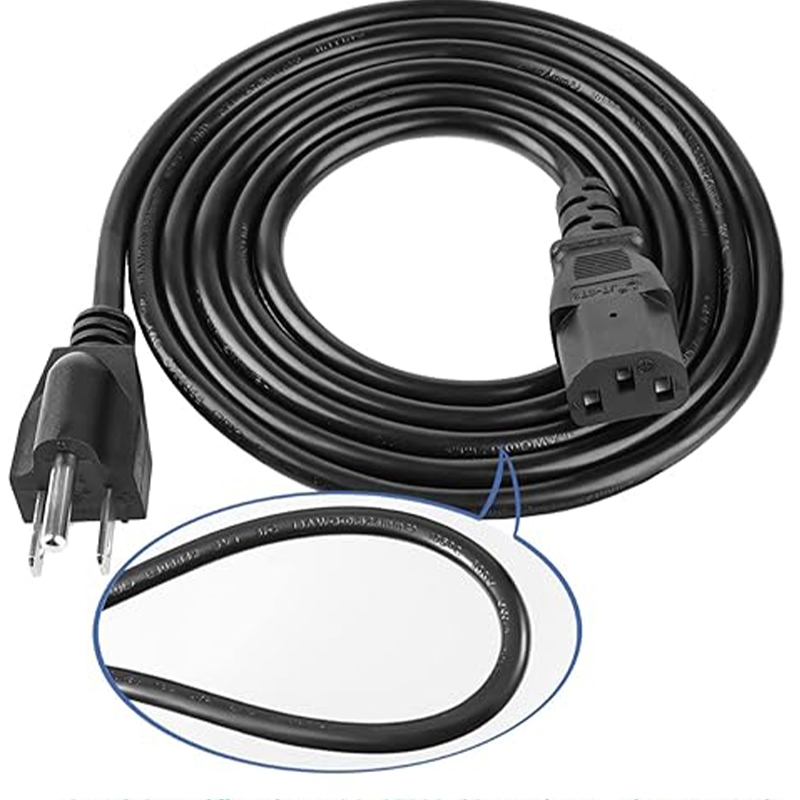
The NEMA 5-15P Plug
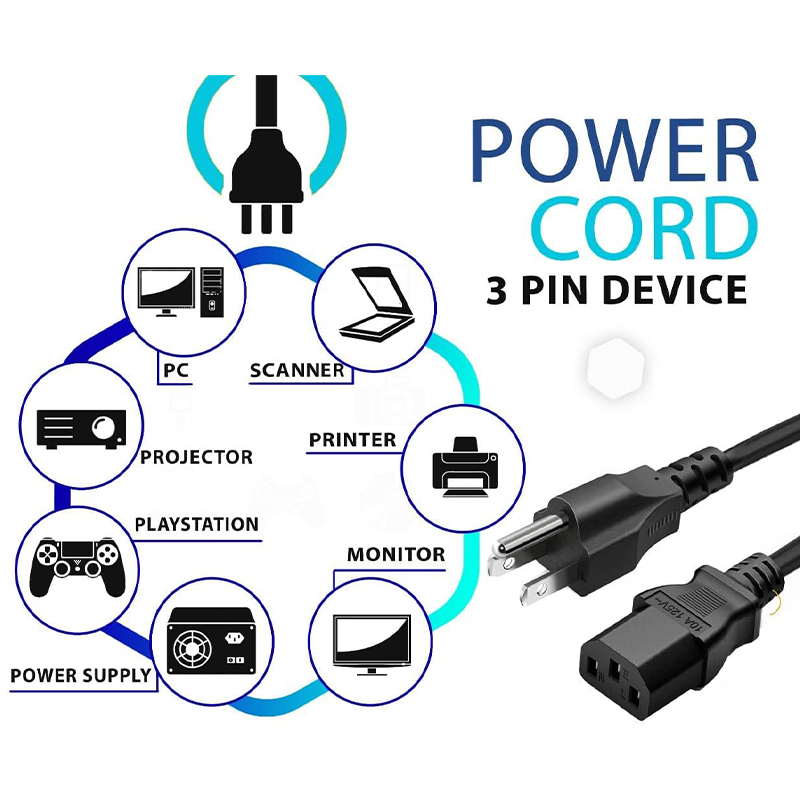
The NEMA 5-15P plug is the ubiquitous US 3-prong power cord standard found in homes, offices, and commercial environments across North America.
* 5 denotes a voltage rating of 125V (optimized for 110V–120V systems).
* 15 indicates a maximum current capacity of 15 Amps.
* P stands for Plug (male end).
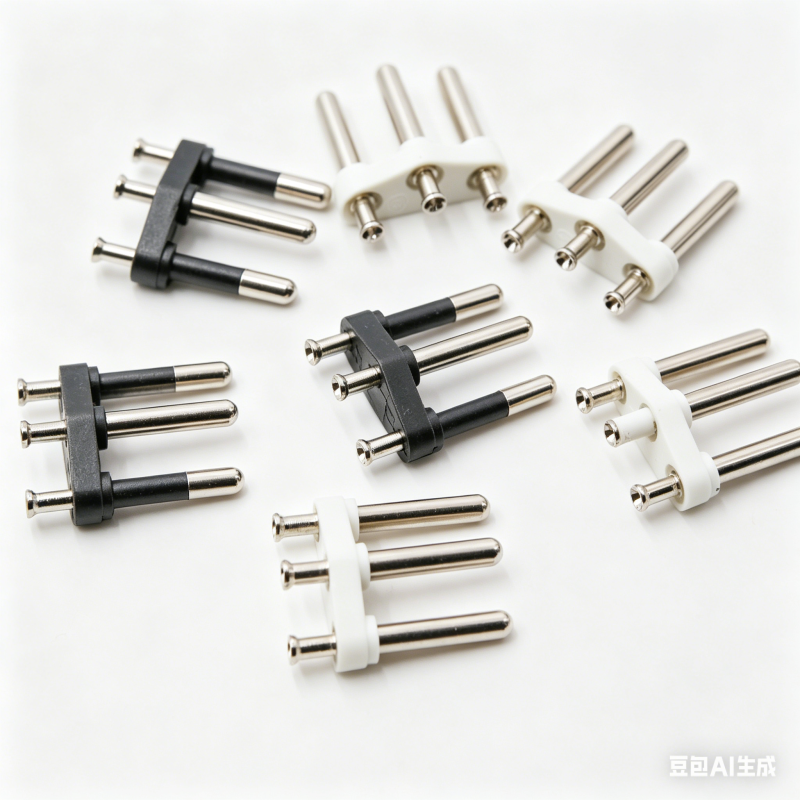
It features two parallel flat blades (hot and neutral) and a round grounding pin, establishing a secure, grounded power cable interface.
The IEC 60320 C13 Connector
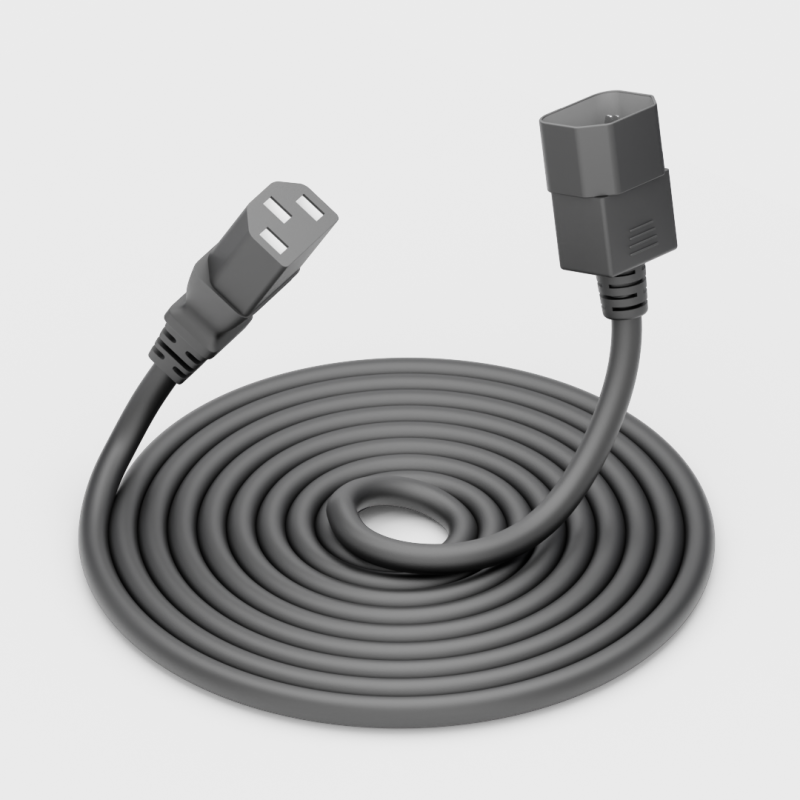
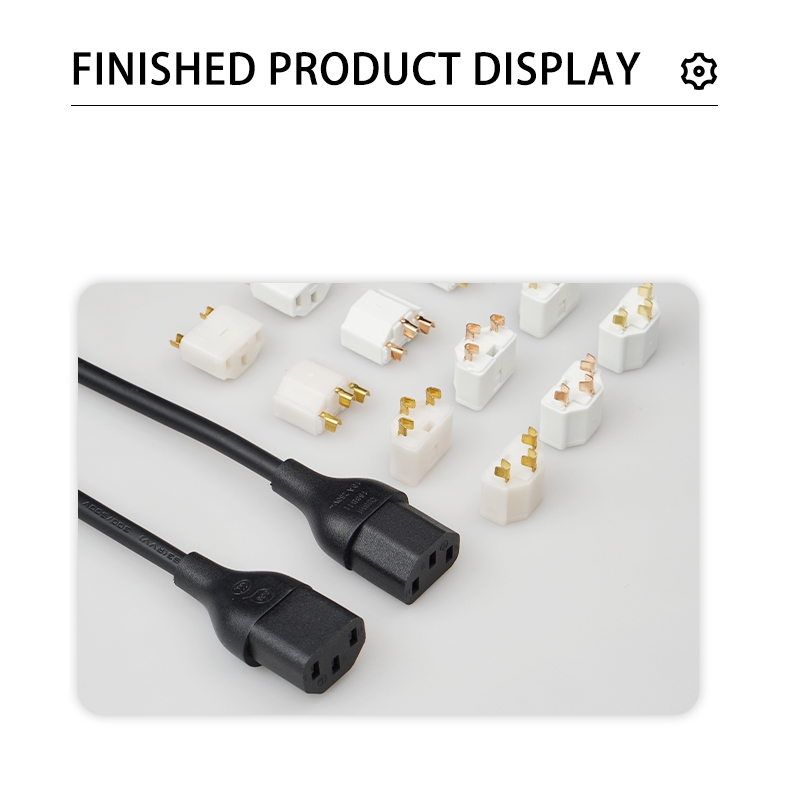
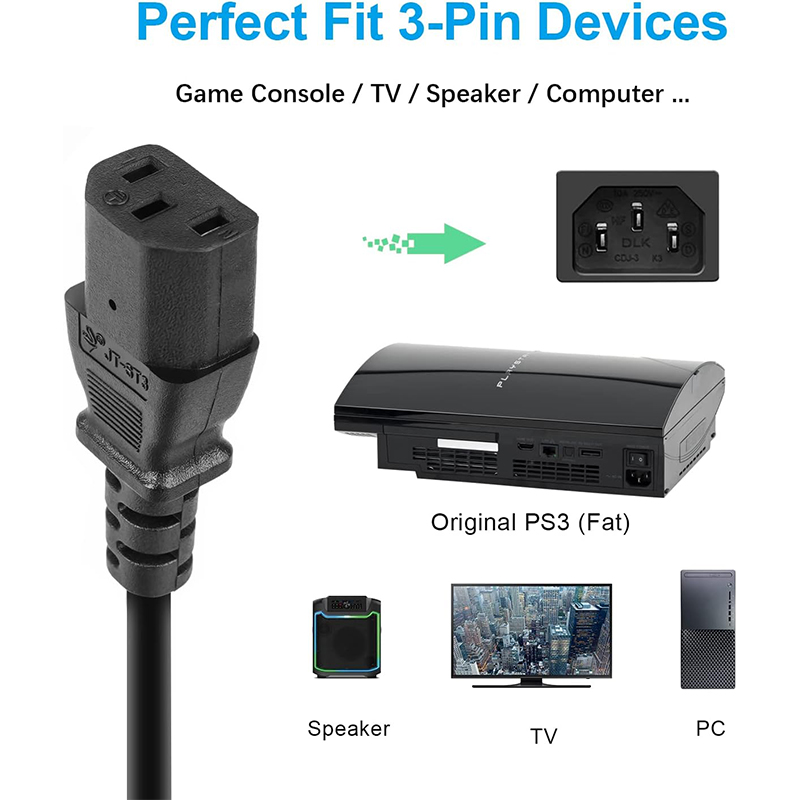
Conversely, the IEC 60320 C13 connector is an international, non-polarized standard designed for equipment power inlets. Colloquially termed the "kettle plug," this female receptacle features three recessed slots that matingly connect with the male C14 inlet built into the power supplies of enterprise hardware.
Why It Dominates IT Infrastructure
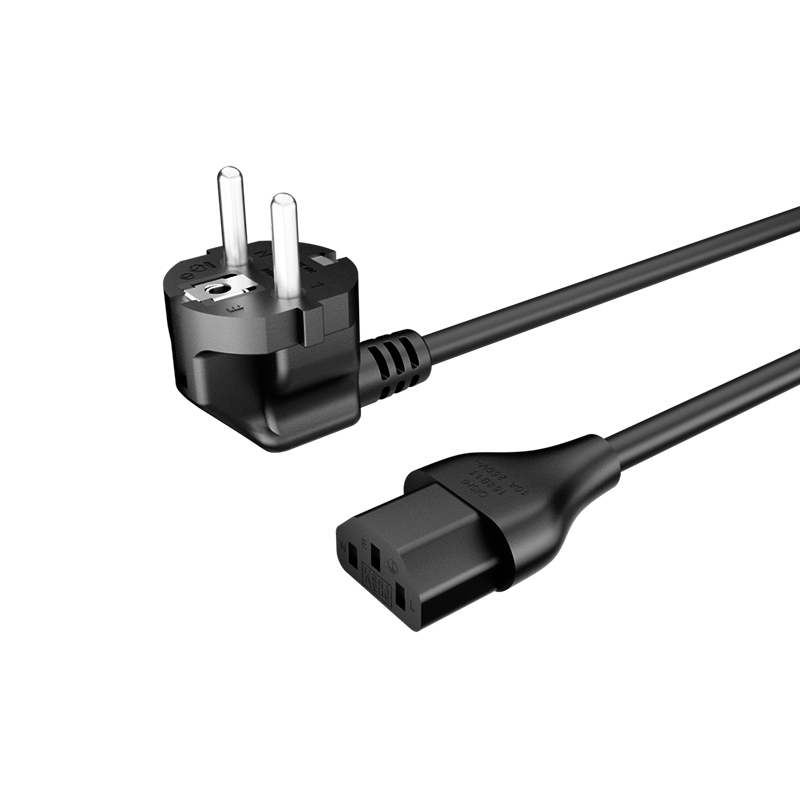
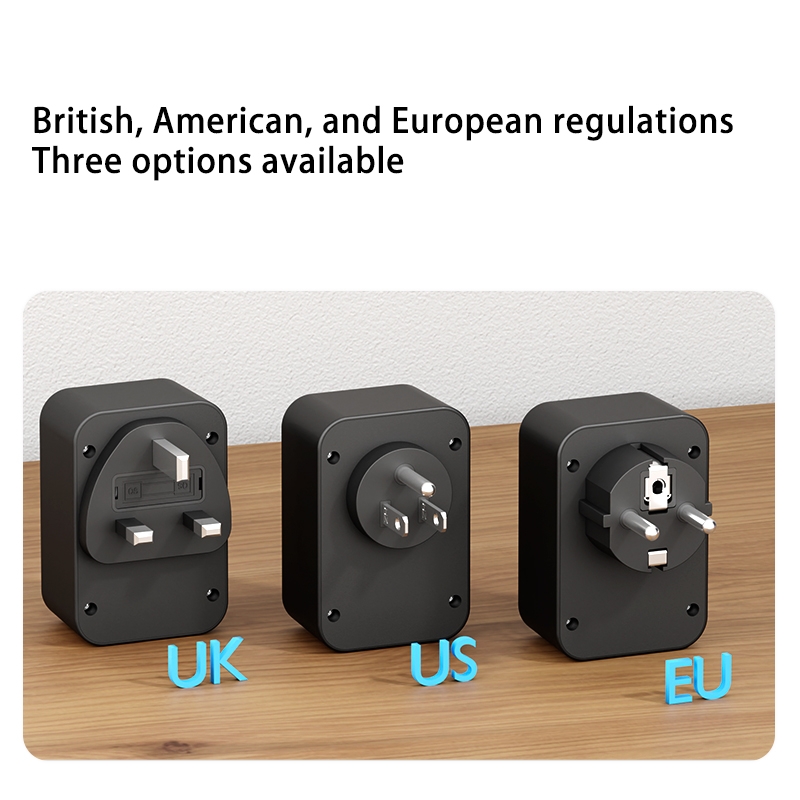
The NEMA 5-15P to IEC C13 explained simply is an adaptation bridge: it connects standard North American utility grid infrastructure to universally designed hardware power supplies. This enables a hardware manufacturer to sell the exact same server power supply worldwide, requiring only a regional power cord change (e.g., NEMA 5-15P for the USA, Schuko for Europe) to operate locally.
2. Enterprise & Consumer Deployments: What Devices Use a C13 Power Cord?
The versatility of the C13 AC power cord means it is deployed across distinct environments, ranging from home gaming setups to hyperscale multi-tenant data centers.
| Deployment Environment | Target Equipment & Subsystems | Crucial Cable Requirements |
| Enterprise Data Centers | High-density Rackmount Servers, Managed Power Distribution Units (PDUs), Uninterruptible Power Supplies (UPS systems), Core Network Switches, SAN Storage Arrays. | Continuous duty cycle, high thermal thresholds, low-resistance copper, strict regulatory traceability. |
| Commercial Offices | Commercial Desktop Computers, LED Multi-Monitors, High-Volume Laser Printers, PoE Network Switches, VoIP Base Stations. | Cable flexibility, optimal routing length, mechanical stress resistance. |
| Consumer Electronics | Custom Gaming PCs, Active Studio Audio Monitors, Smart Televisions, Digital AV Receivers, Desktop Workstations. | Electromagnetic shielding, standard flexibility, aesthetic longevity. |
3. The Technical Core: 18AWG vs. 16AWG vs. 14AWG Wire Gauges
When procuring bulk wholesale computer power cords, technical specifications override physical appearance. The most critical mechanical specification is the American Wire Gauge (AWG) rating, which measures the cross-sectional area of the internal copper conductors.
As the AWG number decreases, the copper wire diameter increases, allowing it to carry more electrical current with less resistance and lower heat generation.
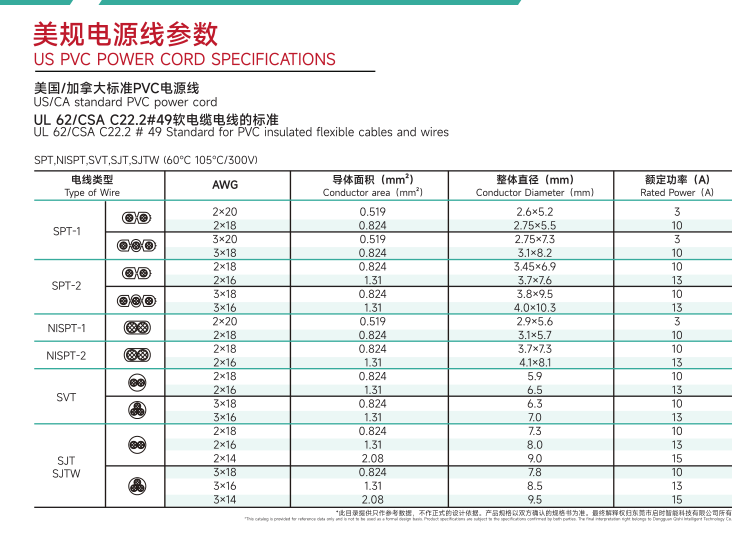
18AWG C13 Power Cord
* Maximum Rated Current: 10 Amps (Continuous load limit: 8A based on the NEC 80% rule).
* Ideal Use Cases: Desktop PCs, LED monitors, office printers, low-draw network switches.
* Limitations: Do not deploy 18AWG cables for enterprise servers or high-density network arrays, as the narrow copper gauge can restrict current flow, driving up line impedance and cable temperatures.
16AWG Heavy Duty Power Cord
* Maximum Rated Current: 13 Amps (Continuous load limit: 10.4A).
* Ideal Use Cases: Mid-range enterprise servers, blade chassis, high-draw network switches, mid-tier UPS power cables.
* Engineering Advantage: Provides an exceptional margin of safety and minimizes voltage drop over mid-to-long distance runs within data racks.
14AWG Server Power Cable
* Maximum Rated Current: 15 Amps (Continuous load limit: 12A).
* Ideal Use Cases: High-density enterprise servers, high-capacity UPS units, heavy-duty industrial equipment.
* Engineering Advantage: Features ultra-low electrical resistance. Engineered for extreme duty cycles where maximizing system efficiency and preventing thermal expenditure is a core requirement.
Engineering Reference Matrix
| Wire Gauge (AWG) | Nominal Conductor Diameter | Max Current (125V) | Ultimate Application Profile | Cable Jacket Type |
| 18 AWG | 1.024 mm | 10 Amps | Low-draw workstation components, monitors, personal computing | SVT / SJT |
| 16 AWG | 1.291 mm | 13 Amps | Enterprise-grade network routing switches, primary rack servers | SJT |
| 14 AWG | 1.628 mm | 15 Amps | Mission-critical heavy duty computer power cords, UPS arrays | SJT |
4. Troubleshooting & Safety: Diagnosing Thermal and Mechanical Failures
In high-uptime computing setups, power cords face mechanical stress, environmental heat, and electrical overloads. Identifying failure modes before they cause downtime is essential for proactive facility maintenance.
Issue 1: Why Is My C13 Power Cord Getting Hot to the Touch?
An overheating power cord or a hot C13 cable indicates a serious electrical issue that requires immediate investigation:
1. Conductor Under-Sizing: Attempting to power a 12A enterprise server with an 18AWG C13 power cord causes high electrical resistance, transforming electrical energy into hazardous radiant heat.
2. Corroded or Loose Terminations: Over time, the internal female leaf contacts within a standard C13 plug expand and lose tension. This creates a high-resistance point of contact, driving up temperatures and threatening to melt the outer PVC molding.
3. Substandard Copper Purity: Low-cost, non-certified cables often utilize Copper-Clad Aluminum (CCA) or impure copper recycling stocks. CCA lacks the current-carrying performance of pure, oxygen-free copper, leading to rapid thermal saturation under normal loads.
Issue 2: Can I Use a 10A C13 Cord for an Enterprise Server?
The answer depends entirely on the maximum rated draw of the server's Power Supply Unit (PSU) and regional safety codes:
* The Math: If a server PSU is rated at 750W operating on a 120V line, its current draw is approximately $6.25 ext{ Amps}$ ($750 ext{W} / 120 ext{V} = 6.25 ext{A}$). Under continuous load guidelines, an 10A C13 power cord can handle a continuous load of 8A, making this application theoretically acceptable.
* The Reality: Enterprise blade servers regularly draw far higher loads during peak processing, boot cycles, or fan acceleration. If your equipment nameplate current rating exceeds 8A, a 10A cord will violate compliance guidelines. Always use a 16AWG or 14AWG heavy duty IEC C13 cable for server racks to ensure adequate safety margin.
Issue 3: Why Does My Power Cord Keep Falling Out of the Server?
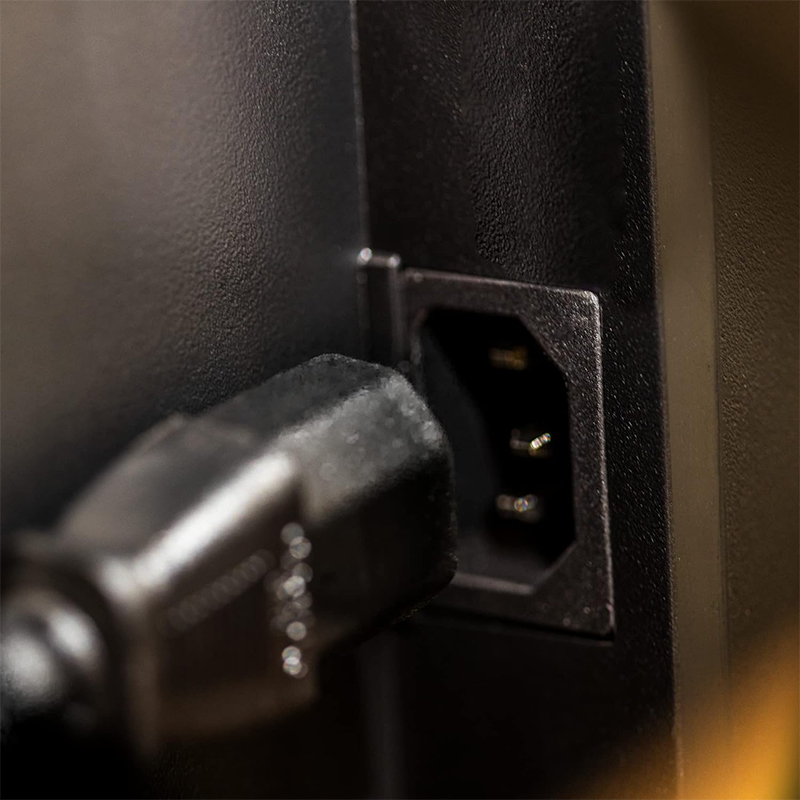
Standard C13 connectors rely on friction to stay seated inside a C14 inlet. Vibrations from high-RPM server fans, structural cooling systems, or accidental contact during routine maintenance can dislodge the cable, causing immediate data loss.
* The Engineering Fix: Deploy an advanced locking IEC C13 power cord. These specialized cables use an internal mechanical locking mechanism or a retention sleeve that tightly clamps onto the earth pin of the standard C14 inlet. They can only be released by pressing an integrated button or pull tab, completely eliminating accidental disconnections.
5. Compliance & Certification: UL Listed vs. Non-Certified Power Cords
In commercial and industrial procurement, using uncertified power infrastructure components is a major liability risk. Non-certified cables can invalidate corporate insurance coverage, void hardware warranties, and violate local occupational safety mandates.
The Critical Role of UL Listing
A genuine UL listed power cord has undergone destructive laboratory testing by Underwriters Laboratories. This testing verifies that the cable meets rigorous standards for flame resistance, electrical conductivity, insulation durability, and mechanical pull-force tolerance.
* Look for the explicit stamp "UL Listed" alongside the control file number molded into both the NEMA 5-15P plug and the C13 receptacle.
* Alternative Recognized Certifications: In North American markets, ETL certified C13 cables or CSA marks (Canadian Standards Association) demonstrate equivalent compliance with harmonized safety criteria.
Material Safety and Jacket Classifications: SJT vs. SVT
Understanding jacket designations is critical for identifying the right cable for your deployment environment:
* SVT (Service Vacuum Tough): A lighter-duty, thinner insulation jacket profile. SVT cables are highly flexible and optimized for standard desktop computers, monitors, and light commercial office equipment where physical space is constrained.
* SJT (Service Junior Thermoplastic): A thick, heavy-duty outer insulation jacket designed for standard service conditions. SJT cables offer excellent protection against structural abrasion, environmental moisture, and mechanical crushing. This makes them the required standard for high-density UL certified server power cords deployed within structural data racks.
* Environmental Directives: Ensure your sourcing pipeline mandates RoHS compliance (Restriction of Hazardous Substances). This ensures your power cables are free from dangerous concentrations of lead, cadmium, mercury, and polybrominated diphenyl ethers, which can off-gas toxins during thermal stress.
6. Cable Management Optimization: Selecting the Perfect Length
Selecting the proper length for your 6ft NEMA 5-15P to C13 cable or 10ft computer power cable is more than an aesthetic preference; it is a fundamental pillar of efficient thermodynamic management.
The Pitfalls of Excess Cable Slack
Deploying long power cords (e.g., 10 feet) for adjacent server-to-PDU connections results in bunched, dangling, or coiled loops of slack at the rear of the server rack. This accumulation blocks critical exhaust pathways from high-RPM server fans, trapping radiant heat within the chassis and increasing cooling energy costs.
Optimal Application Breakdown
* 1FT to 3FT Cables: Ideal for clean, high-density cabinet routing where servers are positioned directly adjacent to vertical or horizontal rack-mount PDUs. This length eliminates clutter and streamlines tracing during maintenance.
* 6FT Cables: The standard choice for commercial office workstations, connecting desktop computers or display configurations to under-desk power strips or wall outlets.
* 10FT+ Cables: Designed for extended runs from standalone equipment arrays to perimeter wall receptacles, or across spatial transitions where a custom length power cord is required.
7. B2B Sourcing Guide: Custom NEMA 5-15P to C13 Manufacturing Solutions
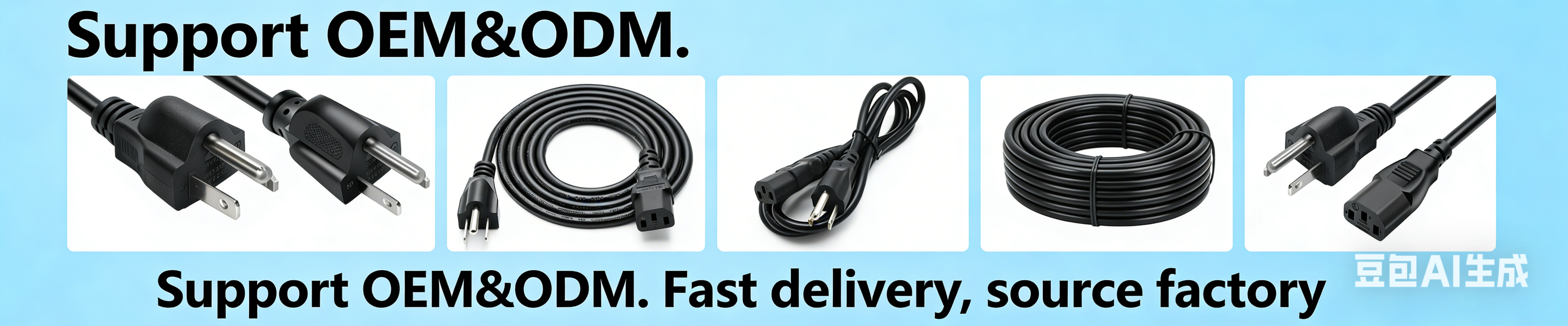
For enterprise data centers, system integrators, and OEM equipment manufacturers, standard off-the-shelf power cords often fall short of precise layout requirements or brand specifications. Partnering with an established, production-grade power cord factory opens up extensive customization options tailored to high-density environments.
Key OEM/ODM Customization Parameters
1. Precision Length Engineering: Order exact-length cables to eliminate slack inside server cabinets, optimize airflow, and simplify infrastructure troubleshooting.
2. Advanced Color Coding: Source power cables in distinct colors (e.g., red, blue, green, yellow). Data centers use color coding to distinguish redundant power paths (e.g., Path A vs. Path B), making it easy to identify individual circuits during a power outage.
3. Angled Connector Profiles: Specify right-angle, left-angle, upward, or downward orientations for both the NEMA 5-15P plug and the C13 connector. Angled profiles reduce the physical clearance required behind network hardware, allowing enclosure doors to close smoothly without putting mechanical stress on the cable jacket.
4. Custom Branded Packaging & Labeling: High-volume deployments benefit from custom barcoding, part-number labeling, and eco-friendly bulk packaging, which speeds up on-site installation.
Selecting a Commercial Manufacturer
When selecting an OEM power cord manufacturer for custom server power cables, verify they have certified quality management systems (ISO 9001:2015), provide accessible UL/ETL tracking records, and perform 100% electrical testing (continuity, polarity, and high-pot insulation safety testing) on every production lot.
8. Frequently Asked Questions (FAQ)
What is the difference between C13 and C15 connectors?
While they look similar, the IEC C13 and C15 connectors differ significantly in temperature ratings and physical keys. The standard C13 connector is rated for a maximum operating pin temperature of 70°C. The C15 connector features an integrated physical notch cutout on its base and is rated for high-temperature environments up to 120°C. C15 cables are typically required for high-draw PoE network switches, specialized server blade enclosures, and cooking appliances. A C15 cord can fit into a C14 inlet, but a standard C13 cord cannot plug into a C15 inlet.
Can I use a C13 power cord for a high-resolution monitor?
Yes, absolutely. Most high-resolution monitors and commercial displays feature an integrated male IEC C14 power inlet. Because monitors generally draw minimal current (typically under $1.5 ext{ Amps}$), a standard 18AWG C13 power cord is safe, compliant, and well-suited for the application.
Is an 18AWG cord sufficient for a high-end gaming PC?
It depends on your system's power supply. Modern gaming PCs with high-end GPUs and multi-rail power supplies often use 850W to 1200W PSUs. At 120V, a 1200W workload draws $10 ext{ Amps}$ ($1200 ext{W} / 120 ext{V} = 10 ext{A}$), which hits the maximum theoretical limit of an 18AWG cable. For high-end gaming PCs, we recommend upgrading to a 16AWG heavy duty computer power cord to prevent voltage drop and ensure the cable runs cool during intense gaming sessions.
What is the absolute maximum current rating for a standard NEMA 5-15P plug?
The NEMA 5-15P plug is rated by regulatory standards for a maximum of 15 Amps at 125 Volts. However, under the National Electrical Code (NEC) continuous load guidelines, any electrical device operating continuously for three hours or more must not exceed 80% of the circuit's maximum rating. Therefore, the safe continuous operational limit for a NEMA 5-15P plug is 12 Amps.
Are all C13 power cords manufactured with identical copper interiors?
No. High-quality cables use 100% pure, oxygen-free copper conductors for optimal conductivity and safety. Lower-cost, non-certified alternative brands often use Copper-Clad Aluminum (CCA) wire to reduce manufacturing costs. CCA has much higher electrical resistance than pure copper, which increases the risk of thermal failure and voltage drops over long cable runs.
What are the main benefits of a locking IEC C13 connector?
A locking C13 connector features an internal mechanical mechanism that grips the earth pin of a standard C14 inlet. This design prevents the cable from slipping out due to server fan vibrations or accidental contact by technicians during routine maintenance, protecting your data center from unexpected downtime.
What specific certifications are mandatory for importing power cords into the United States?
To sell or install power infrastructure equipment in commercial environments across the United States, cables must be certified by a Nationally Recognized Testing Laboratory (NRTL). The most widely recognized marks are UL (Underwriters Laboratories) and ETL (Intertek). Additionally, cables must comply with RoHS environmental directives and meet local National Electrical Code (NEC) flame-retardant standards.
9. Conclusion & Actionable Sourcing Insights
Selecting the right NEMA 5-15P to C13 power cord involves evaluating several key technical factors: matching the wire gauge to your system's current draw, verifying NRTL safety listings, and optimizing cable length to maintain clear airflow. Investing in high-quality, pure copper cables helps prevent unexpected hardware downtime and keeps your infrastructure running safely.
???? ptimize Your Enterprise Power Infrastructure
Are you looking to streamline your data center layout, eliminate cable clutter, or source certified bulk power solutions? Get in touch with our technical engineering team today for a tailored consultation.
* Request a Custom OEM/ODM Production Quote
* Order Free Project Validation Samples (Volume Commercial Accounts
References
1. National Electrical Manufacturers Association (NEMA): *ANSI/NEMA WD 6-2021 - Wiring Devices Dimensional Specifications*. Highlighting North American plug configurations, including the NEMA 5-15P standard. [https://www.nema.org/standards/view/wiring-devices-dimensional-specifications]
2. International Electrotechnical Commission (IEC): *IEC 60320-1:2021 - Appliance couplers for household and similar general purposes*. Defining the global physical and structural requirements for C13 and C14 coupler interfaces. [https://webstore.iec.ch/publication/62322]
3. Underwriters Laboratories (UL LLC): *UL 817 - Standard for Cord Sets and Power-Supply Cords*. Detailing testing standards for safety compliance, thermal limits, and durability. [https://standardscatalog.ul.com/ProductDetail.aspx?productId=UL817]
4. National Fire Protection Association (NFPA): *NFPA 70 - National Electrical Code (NEC), 2023 Edition*. Providing guidelines on the 80% continuous load rule for ampacity ratings and wire gauges. [https://www.nfpa.org/codes-and-standards/all-codes-and-standards/list-of-codes-and-standards/detail?code=70]



 Email
Email