

Content Menu
● What is a 2 Prong Power Cord?
● How Does a 2 Prong Power Cord Work?
● 2 Prong vs. 3 Prong Power Cords: Technical Comparison
● Common Applications for 2 Prong Power Cords
● Are 2 Prong Power Cords Safe? Regulatory Standards
● How to Select the Ideal 2 Prong Power Cord
● B2B Custom Engineering (OEM/ODM)
● B2B Procurement: Critical Pitfalls to Avoid
● Why Partner with a Professional Power Cord Manufacturer?
● Frequently Asked Questions (FAQ)
As an industrial electrical safety compliance engineer and AC power cord manufacturer with over two decades of factory-floor experience, I have witnessed how a single miscalculated component can halt an entire global supply chain. In the power supply ecosystem, the 2 prong power cord (also widely searched as *two prong power cord* or *2 pin power cord*) remains one of the most commonly deployed yet frequently misunderstood components.
For international procurement managers, electrical engineers, and B2B brand owners, selecting the right non-grounded power cord requires navigating strict regulatory frameworks, understanding manufacturing nuances, and minimizing liability risks.
This comprehensive guide provides a deep technical analysis of 2 prong AC power cord systems, contrasts them with three-prong configurations, examines safety parameters, and outlines professional B2B procurement strategies.
What is a 2 Prong Power Cord?
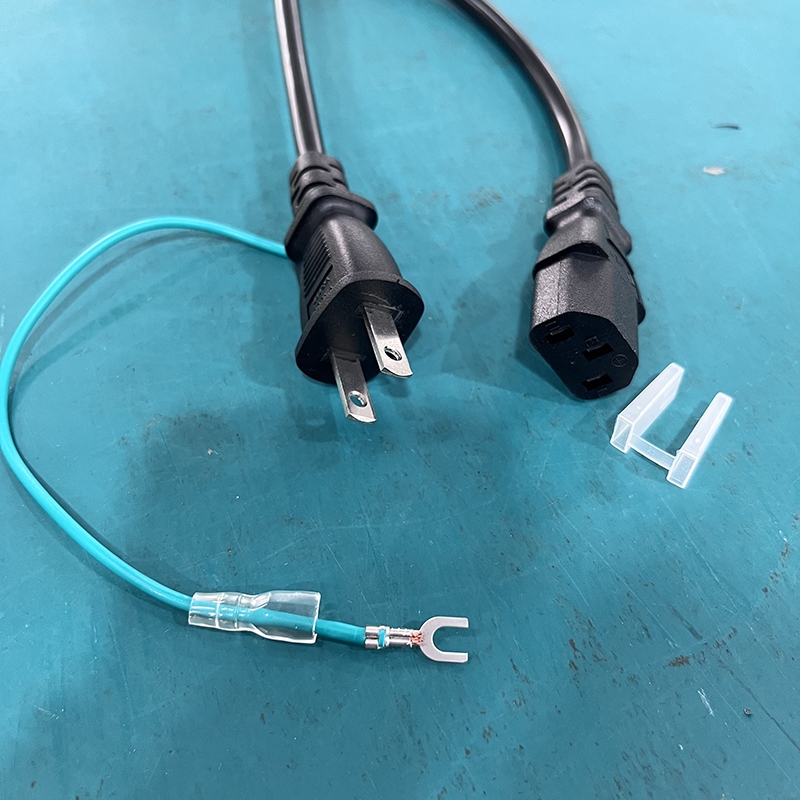
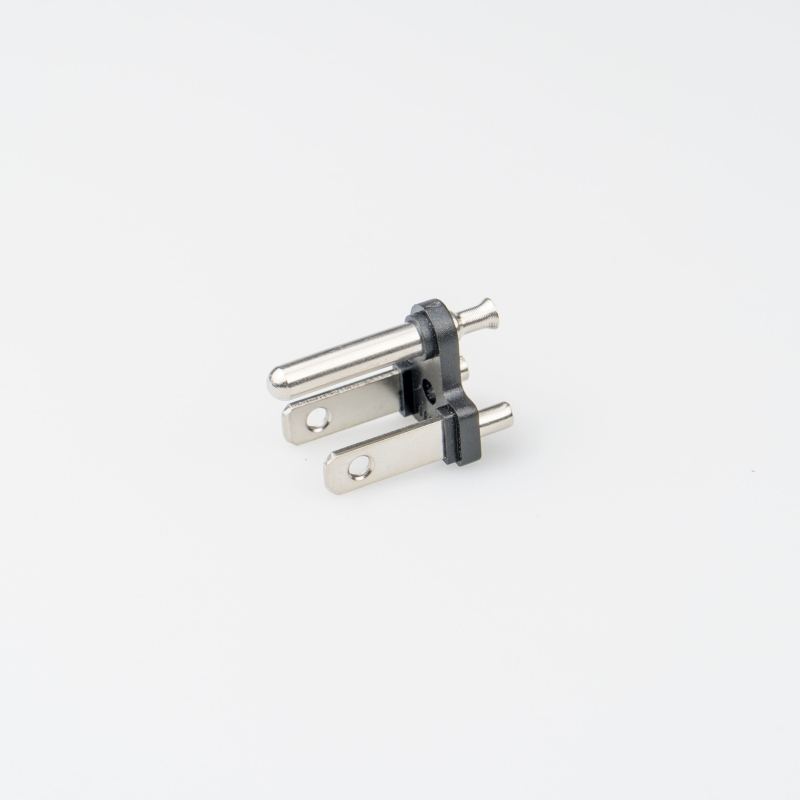
A 2 prong power cord is a two-conductor electrical cable designed to connect low-power or specialized consumer and industrial appliances directly to an AC power source. Unlike its three-prong counterpart, it operates without a dedicated equipment grounding conductor.

Basic Internal Anatomy
A standard two-prong cable consists of two core conductors:
- Live Conductor (Line): Typically black insulation in North America or brown in Europe. In polarized plugs, it connects to the narrower blade (brass).
- Neutral Conductor: Typically white insulation in North America or blue in Europe. In polarized plugs, it connects to the wider blade (silver).
The Absence of Grounding
Without a third grounding pin, these cords rely entirely on robust structural design and double insulation to prevent electrical shock. They are therefore restricted to low-power appliances or equipment engineered with specialized internal electrical isolation.
How Does a 2 Prong Power Cord Work?
Alternating current (AC) flows in a continuous loop. The live wire delivers energy to the appliance's internal circuitry (transformer, motor, or electronics), while the neutral wire returns the current to the power source, completing the circuit.
Class II Double Insulation Safety Philosophy
Since there is no ground path, safety depends on Class II construction (per IEC 61140). Class II appliances use double or reinforced insulation so that no single failure can expose users to dangerous voltage.
1. Basic Insulation – Primary protection around the copper conductors.
2. Supplementary Insulation – Independent secondary layer (usually the outer jacket) that maintains protection even if the basic insulation is compromised.
2 Prong vs. 3 Prong Power Cords: Technical Comparison
| Evaluation Metric | 2 Prong Power Cord | 3 Prong Power Cord |
|---|---|---|
| Ground Conductor | Absent (L / N only) | Present (L / N / G) |
| Primary Safety Strategy | Class II Double Insulation | Class I Protective Earthing |
| Chassis Compatibility | Non-conductive (Plastic, Polymer) | Conductive (Metal) |
| Typical Fault Response | Internal barriers prevent leakage | Breaker trips via ground path |
| Target Applications | Consumer electronics, small appliances | Heavy machinery, servers, medical equipment |
| Manufacturing Cost | Lower | Higher |
Common Applications for 2 Prong Power Cords
1. Consumer & Home Appliances
- Lighting (desk lamps, LED strips, holiday lights)
- Fans and air purifiers
- Small kitchen appliances with plastic housings (blenders, juicers, mixers)
2. Digital & Electronic Devices
- Laptop power adapters and wall warts
- Routers, soundbars, monitors, and media players
3. Professional & Specialized Equipment
- Beauty devices (hair dryers, curling irons)
- Double-insulated medical and therapeutic devices
- Light industrial tools and lab equipment
Are 2 Prong Power Cords Safe? Regulatory Standards

Yes — when properly designed, manufactured, and certified.
Key global certifications include:
- North America: UL 817 / ETL
- Europe: VDE / CE / EN 60320
- Australia: SAA / AS/NZS 3112
- Japan & Korea: PSE / KC
- Environmental: RoHS & REACH
How to Select the Ideal 2 Prong Power Cord
1. Voltage and Amperage Rating
Match or exceed the device's maximum draw (e.g., 125V/10–15A in North America, 250V in Europe/Asia).
2. Conductor Gauge (AWG & mm²)
- 20 AWG (0.5 mm²) — Light duty (≤5A)
- 18 AWG (0.75 mm²) — Standard electronics (≤10A)
- 16 AWG (1.25–1.5 mm²) — Higher power (13–15A)
3. Jacket Material & Temperature Rating
Standard PVC: 70°C. High-end applications: 105°C compounds.
Common Wire Types
- SPT-1: Thin insulation (0.030″ / 0.76 mm) — lightweight, highly flexible, ideal for lamps and clocks.
- SPT-2: Thicker insulation (0.045″ / 1.14 mm) — better mechanical and heat resistance, preferred for kitchen appliances.
European Harmonized Cords
- H03VVH2-F / H03VV-F: Light duty
- H05VV-F / H05VVH2-F: Medium duty, suitable for damp environments
B2B Custom Engineering (OEM/ODM)
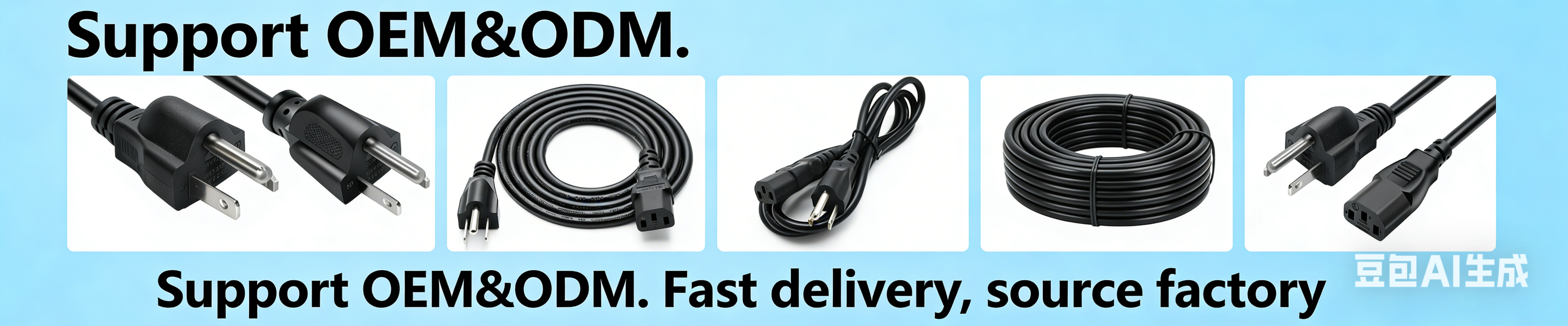
Modern manufacturers offer full customization:
- 100% Oxygen-Free Copper (OFC) conductors (avoid CCA)
- Custom lengths, colors, jacket compounds
- Right-angle plugs, strain reliefs, and branded molding
B2B Procurement: Critical Pitfalls to Avoid
Pure Copper vs. Copper-Clad Aluminum (CCA)
CCA has significantly higher resistance, leading to dangerous heat buildup (P = I²R). Always demand pure copper conductors in your specifications.
Essential Quality Control Tests
- Hi-Pot (High Potential) testing
- Continuity & polarity verification
- Mechanical flexing and tumbling tests
Why Partner with a Professional Power Cord Manufacturer?
Working directly with a vertically integrated factory (such as Dongguan Zhenghao Electric Co., LTD) delivers:
- Competitive factory-direct pricing
- Full control from copper drawing to final testing
- Certified UL, ETL, VDE, SAA, and RoHS/REACH solutions
- Rapid prototyping and flexible production
Frequently Asked Questions (FAQ)
Q1: Can a 2 prong power cord replace a 3 prong cord?
No. Never substitute on Class I appliances that require grounding. Doing so creates a serious shock hazard.
Q2: Does a 2 prong power cord have a ground wire?
No. It contains only live and neutral conductors and relies on Class II double insulation for safety.
Q3: What is the main difference between SPT-1 and SPT-2 cords?
Insulation thickness. SPT-1 is thinner and lighter; SPT-2 is thicker and more durable.
Q4: Are your 2 prong power cords globally certified?
Yes. We provide authentic regional certifications (UL/ETL, VDE, SAA, PSE, KC) and full RoHS/REACH compliance.
Q5: Can I request custom branding and plug designs?
Yes. We support full OEM/ODM services including custom lengths, colors, logos, and specialized molding.
References
- IEC 61140: Protection Against Electric Shock
- UL 817: Standard for Cord Sets and Power-Supply Cords
- EN 60320: Appliance Couplers
- AS/NZS 3112: Plugs and Socket-Outlets
- RoHS & REACH Directives



 Email
Email