


Content Menu
● Why Power Strip Safety Matters for B2B Buyers and Distributors
● Key Materials That Determine High-Quality Power Strips
>> 1. Conductor Material: Pure Copper vs. Iron and Alloys in Power Strips
>> 2. Power Cord Standards: Why Pure Copper Is Mandatory for Safety
● Critical Performance Tests for Power Strip Safety
● Recent CPSC Recalls & Real-World Industry Cases (2025-2026)
● Practical Buying Tips: How to Identify Safe Bulk Power Strips
● B2B Sourcing Checklist: Step-by-Step Guide for Importers and Power Strip Wholesale Buyers
● 2026 Market Trends: What Top Power Strip Manufacturers Do Differently
● Industry Warning: The Hidden Costs of Choosing Cheap Power Strips
● Recommended Image & Media Placement for SEO and User Engagement
● Conclusion: Secure Your Supply Chain with Safe, UL Certified Power Strips
● Frequently Asked Questions (FAQ) about High-Quality Power Strips
<p>
Electricity powers nearly every device in homes, offices, and factories. For B2B buyers, power strip wholesale suppliers and power strip manufacturers play a critical role in delivering safe, reliable power distribution. Yet not all power strips are equal. Recent 2025-2026 testing and CPSC investigations reveal that many low-cost units use substandard materials, undersized conductors, and false labeling—creating serious overheating and fire risks.
As a manufacturer with over 15 years producing high-quality power strips, extension cords, and electrical solutions, we combine real lab data, user feedback, and industry expertise to help importers, distributors, and brand owners source safe bulk power strips. This guide delivers practical buying advice, expert testing insights, and B2B-specific strategies to avoid dangerous products while protecting your reputation.
Why Power Strip Safety Matters for B2B Buyers and Distributors
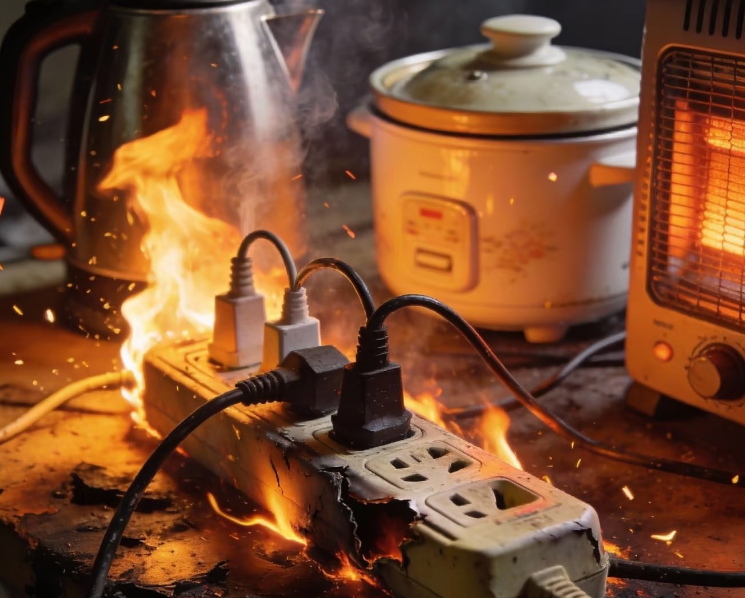
A power strip may look simple, but it handles continuous high loads. Poor manufacturing leads to:
• Excessive heat buildup
• Insulation failure
• Electrical fires
• Short circuits
• Damage to connected equipment
According to the Electrical Safety Foundation International (ESFI), roughly 3,300 home fires originate in extension cords and power strips each year, resulting in 50 deaths and 270 injuries. NFPA data further shows electrical distribution equipment causes an average of 31,647 home structure fires annually, leading to 425 deaths and $1.6 billion in property damage.
For power strip manufacturers, wholesalers, and importers, safety is not optional—it protects users and shields your business from costly recalls, legal liability, and brand damage.
Key Materials That Determine High-Quality Power Strips
1. Conductor Material: Pure Copper vs. Iron and Alloys in Power Strips
The most critical internal component is the current-carrying conductor.
Pure copper offers:
• Resistivity: 1.75 × 10⁻⁸ Ω·m
• Superior conductivity and minimal heat generation
• Excellent long-term durability
Iron conductors (sometimes falsely labeled as copper) have resistivity of 9.78 × 10⁻⁸ Ω·m—more than five times higher—causing rapid overheating under normal loads.
Copper-zinc alloys (brass with ~60% copper) can be acceptable if conductor thickness meets standards, but many low-cost products reduce thickness to cut expenses, leading to failure.
2. Power Cord Standards: Why Pure Copper Is Mandatory for Safety
National and international safety standards strictly require pure copper wires. Copper-clad aluminum is prohibited in compliant products.
Testing of low-cost power strips often reveals 96–98% aluminum content, delivering only 60–70% of pure copper's current-carrying capacity. At 30°C ambient temperature, internal wire temperature can reach 86°C—creating a severe fire hazard. Properly designed pure copper cords stay well below dangerous levels.
Critical Performance Tests for Power Strip Safety
Industry laboratories use standardized tests to evaluate safety. Here is a clear comparison:
Test Item,Qualified Standard,Poor-Quality Result
Conductor Cross-Section,≥ 2.63 mm²,As low as 0.76 mm²
Temperature Rise,≤ 20K,Up to 41.2K
Internal Temperature,≤ 45°C,Up to 66°C
Flame Retardant,Self-extinguishing,No resistance
Substandard materials directly cause higher temperatures and increased fire risks.
Recent CPSC Recalls & Real-World Industry Cases (2025-2026)
In January 2026, the U.S. CPSC recalled approximately 1,320 HEZI brand power strips due to ungrounded metal enclosures posing electrocution risks. In December 2025, 11,200 ANNQUAN brand power strips were recalled for missing overcurrent protection, creating fire hazards when overloaded. In March 2026, the CPSC issued a public warning for CCCEI power strips sold on Amazon due to the same overload and fire risk.
These real cases demonstrate how choosing unreliable safe power strip suppliers can expose B2B partners to massive recalls and reputational damage.
Practical Buying Tips: How to Identify Safe Bulk Power Strips
1. Compare Weight — High-quality units typically have conductor weight around 38g versus only 11g in cheap versions (over 3 times more conductive material).
2. Verify Certifications — Demand GB 2099.7-2024 (mandatory overload protection since August 2025), UL, CE, SAA, and ETL. Look for explicit "pure copper conductor" declarations.
3. Watch for Aging Signs — Replace immediately if you notice yellowing plastic, excessive heat, loose sockets, or burning smells. Experts recommend replacing heavily used power strips every 3–5 years.
B2B Sourcing Checklist: Step-by-Step Guide for Importers and Power Strip Wholesale Buyers
To source reliable power strip wholesale products safely:
1. Request detailed material specification sheets and copper purity test reports.
2. Demand temperature-rise test results under full rated load.
3. Verify factory export certifications and independent third-party lab reports.
4. Evaluate the manufacturer's production experience (ideally 10+ years).
5. Order and test samples before committing to bulk orders.
Reputable power strip manufacturers conduct rigorous copper verification, flame-retardant inspections, and long-term durability testing (plug cycles + heat aging) before export.
2026 Market Trends: What Top Power Strip Manufacturers Do Differently
Leading factories now treat GB 2099.7-2024 overload protection as standard, use thicker pure-copper conductors, and implement automated quality scanning. Many also provide custom power strips tailored for commercial offices and industrial environments while meeting UL and IEC standards for commercial power strips and industrial power strip wholesale.
Industry Warning: The Hidden Costs of Choosing Cheap Power Strips
Reducing costs with iron conductors, thin aluminum wiring, or non-flame-retardant plastics can cut material expenses by up to two-thirds. However, the real price includes product recalls, legal liability, lost customer trust, and potential lawsuits. For high quality power strips wholesale buyers, the cheapest option frequently becomes the most expensive mistake.
Recommended Image & Media Placement for SEO and User Engagement
Insert these visuals at the suggested positions to boost dwell time and rankings:
• Conductor material comparison diagram (Copper vs. Iron vs. Aluminum) — after the conductor section
• Internal power strip structure photo — after the performance tests table
• 2026 CPSC recall infographic — after the recalls section
• B2B sourcing checklist flowchart — inside the sourcing checklist section
• UL / CE /UKCA/ GB 2099.7-2024 certification marks collage — near buying tips
Conclusion: Secure Your Supply Chain with Safe, UL Certified Power Strips
High-quality power strips are defined by pure copper conductors, compliant power cords, adequate cross-section area, flame-retardant materials, and strict temperature control. For power strip manufacturers, distributors, importers, and brand owners, partnering with experienced, transparent suppliers is the most effective way to guarantee safety and long-term market credibility.
Ready to source safe bulk power strips? Contact our 15-year expert team today for material specification sheets, UL-certified samples, custom designs, and competitive power strip wholesale pricing. Protect your customers and strengthen your brand with proven quality.
Frequently Asked Questions (FAQ) about High-Quality Power Strips
1. Why are copper conductors important in power strips?
Copper's extremely low resistivity enables efficient current flow with minimal heat generation, significantly reducing overheating and fire risks.
2. How can I verify a power strip uses pure copper wiring?
Check detailed product specifications, certification documents, or request supplier material test reports—internal wiring cannot be reliably judged by visual inspection alone.
3. What temperature is unsafe for a power strip?
Internal temperatures exceeding 60°C usually indicate poor conductor quality or overload, risking insulation damage and fire.
4. How often should power strips be replaced?
Electrical safety experts recommend replacement every 3–5 years, or sooner under heavy commercial or industrial loads.
5. Are heavier power strips always better?
Heavier units generally contain thicker copper conductors and more robust components, offering better safety and durability—especially important for bulk power strips orders.
6. What should B2B buyers ask power strip manufacturers?
Request copper purity reports, temperature-rise test data, GB 2099.7-2024 and UL compliance documents, and factory audit results.
References
1. U.S. Consumer Product Safety Commission (CPSC) – HEZI Brand Power Strips Recall (January 2026) https://www.cpsc.gov/Recalls/2026/HEZI-Brand-Power-Strips-Recalled-Due-to-Risk-of-Serious-Injury-or-Death-from-Electrocution-Sold-by-HEZI-HOME
2. CPSC – ANNQUAN Brand Power Strips Recall (December 2025) https://www.cpsc.gov/Recalls/2026/ANNQUAN-Brand-Power-Strips-Recalled-Due-to-Risk-of-Serious-Injury-or-Death-from-Fire-Sold-on-Amazon-by-Hefei-Juyuan-Sporting-Development
3. CPSC Warning – CCCEI Brand Power Strips (March 2026) https://www.cpsc.gov/Warnings/2026/CPSC-Warns-Consumers-to-Stop-Using-CCCEI-Brand-Power-Strips-Immediately-Due-to-Risk-of-Serious-Injury-or-Death-from-Fire
4. Electrical Safety Foundation International (ESFI) – Extension Cord & Power Strip Safety https://www.esfi.org/reaching-to-safety-use-extension-cords-properly/
5. National Fire Protection Association (NFPA) – Electrical Safety in the Home https://www.nfpa.org/education-and-research/home-fire-safety/electrical-safety-in-the-home
6. GB 2099.7-2024 – Safety Technical Specification for Cord Extension Socket-Outlets https://www.chinesestandard.net/PDF/English.aspx/GB2099.7-2024
7. International Electrotechnical Commission (IEC) – Electrical Safety Standards https://www.iec.ch



 Email
Email