

Indoor Extension Cord vs Outdoor Extension Cord: Differences, Selection Guide, and Safety Usage Tips (2026)
—— Professional Advice from TISDLIP with 20+ Years of Power Cord Manufacturing Experience
Content Menu
● Why Indoor and Outdoor Extension Cords Should Not Be Used Interchangeably
● Core Differences Between Indoor and Outdoor Extension Cords
● Key Differences from a Manufacturer's Perspective
● Can Indoor Extension Cords Be Used Outdoors?
● How to Identify a True Outdoor Extension Cord
● Main Advantages of Indoor Extension Cords
● Limitations of Indoor Extension Cords (Avoid These Scenarios)
● Why Outdoor Extension Cords Handle Harsh Environments
● H05VV-F vs H07RN-F Comparison
● How to Choose the Right Extension Cord for Your Needs
● 5 Most Common Mistakes (TISDLIP Experience)
● How Manufacturers Test Quality (TISDLIP Process)
● FAQ: Common Questions About Indoor vs Outdoor Extension Cords
Introduction: Choosing the wrong extension cord can lead to safety hazards rather than mere inconvenience.
Many people only think about extension cords when they need temporary power — such as using power tools in the garden, connecting outdoor speakers, or reaching distant corners with a vacuum cleaner. However, a common issue we observe is users taking indoor extension cords outdoors, assuming "it's just for temporary use."
As a factory with over 20 years of experience manufacturing power cords and extension cords, TISDLIP has repeatedly seen cases through our global clients: aging outer jackets, moisture-damaged plugs, overheating cables, and even risks of electric shock or fire.
Indoor and outdoor extension cords are fundamentally different products. They differ significantly in insulation materials, wire gauge, waterproof performance, current capacity, and safety certifications. This article explains the differences from a manufacturer's and electrical safety perspective, and provides practical guidance for selection and safe use.
Why Indoor and Outdoor Extension Cords Should Not Be Used Interchangeably
An extension cord acts as an "extended pathway" in the electrical system. Its job is not only to deliver power farther but to do so safely, stably, and reliably. Indoor environments are relatively mild, while outdoors involves exposure to rain and moisture, UV rays from sunlight, extreme temperature fluctuations, dirt, oil, abrasion, and physical pressure from foot traffic or vehicles.
Therefore, outdoor extension cords require thicker insulation, more weather-resistant jacketing, and higher safety standards.

Core Differences Between Indoor and Outdoor Extension Cords
| Comparison Item | Indoor Extension Cord | Outdoor Extension Cord |
|---|---|---|
| Usage Environment | Dry indoor areas | Outdoor, damp environments |
| Jacket Material | PVC (thinner) | Rubber / SJTW / H07RN-F |
| Waterproof Performance | Weak | Strong |
| UV Resistance | Usually none | Present |
| Temperature Range | General | Wider |
| Wire Gauge | Thinner | Thicker |
| Current Capacity | Lower | Higher |
| Suitable Devices | Lamps, chargers, TVs | Power tools, generators, outdoor lighting |
| Safety Certifications | Indoor use | Outdoor-rated certifications |
Key Differences from a Manufacturer's Perspective
1. Insulation and Jacket Materials
- Indoor: Typically uses PVC jacket — lightweight, flexible, and cost-effective, but unsuitable for prolonged exposure to sunlight, rain, or low temperatures.
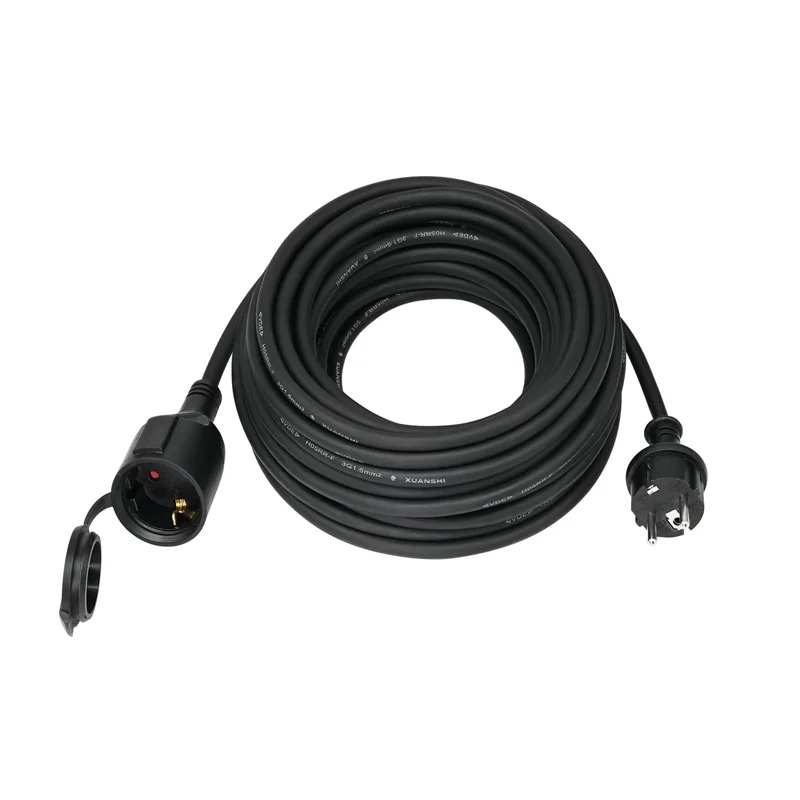
- Outdoor: Uses rubber, SJTW, SJEOW, or H07RN-F jackets — offering superior waterproofing, UV resistance, abrasion resistance, and flexibility even in cold conditions. They withstand dragging and repeated bending.
Manufacturer Tip: When producing outdoor cords, we specifically test jacket performance under low temperatures, UV exposure, and repeated flexing — tests not typically performed on indoor cords.
2. Wire Gauge (AWG / mm²)
Outdoor equipment often has higher power demands (e.g., lawn mowers, pressure washers, saws, generators). Thicker conductors are required to handle larger currents safely.
Common AWG Recommendations:
- 16 AWG: Lamps, chargers, small devices
- 14 AWG: General household tools
- 12 AWG: Heavy-duty outdoor tools
- 10 AWG: Long-distance, high-load applications
Experience Tip: For outdoor use exceeding 15 meters (50 feet), prioritize 12 AWG or thicker.
3. Current Capacity
- Indoor extension cords: Typically 10A–13A
- Standard outdoor: 13A–15A
- Heavy-duty outdoor: 15A–20A or higher
Can Indoor Extension Cords Be Used Outdoors?
Short Answer: Not recommended — even for temporary use.
Risks Include:
- Moisture ingress leading to leakage (thinner insulation)
- UV degradation causing PVC to harden and crack
- Brittleness in cold weather, increasing damage risk during bending
- Insufficient current capacity causing overheating with high-power tools
Real-World Example: During holiday seasons, many households run indoor cords through windows to power outdoor lights. These cords are prone to rain exposure, water accumulation at connections, hardening from nighttime temperature drops, and overheating from prolonged use.
Safety Recommendation: Whenever equipment is used outdoors — even for a few hours — choose cords clearly marked "Outdoor Rated."
How to Identify a True Outdoor Extension Cord

Focus on the markings printed on the cable jacket, not just color or thickness:
- SJTW: Weather-resistant, waterproof, suitable for outdoor use
- SJEOW: Oil-resistant, weatherproof, enhanced flexibility
- H07RN-F: European heavy-duty rubber cable
- Outdoor Rated: Explicitly labeled for outdoor use
- UL / ETL / CE / VDE: Recognized safety certifications
Main Advantages of Indoor Extension Cords
1. Lightweight and Flexible: PVC jacket makes them easy to maneuver around furniture, desks, and cabinets. Ideal for lamps, phone chargers, computers, printers, routers, and small appliances.
2. Cost-Effective: Lower material and manufacturing costs since they don't need outdoor durability features.
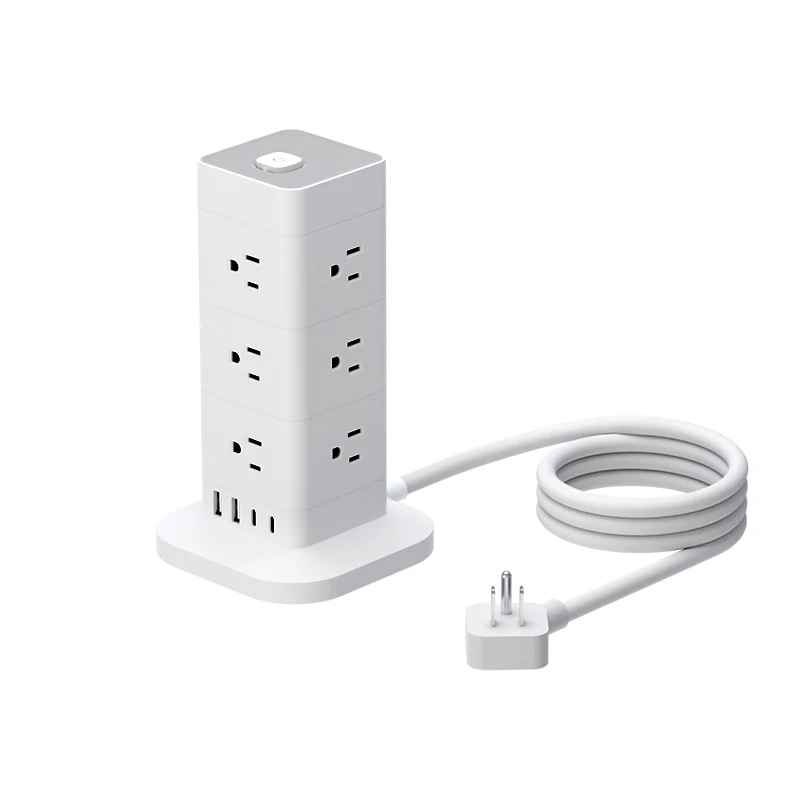
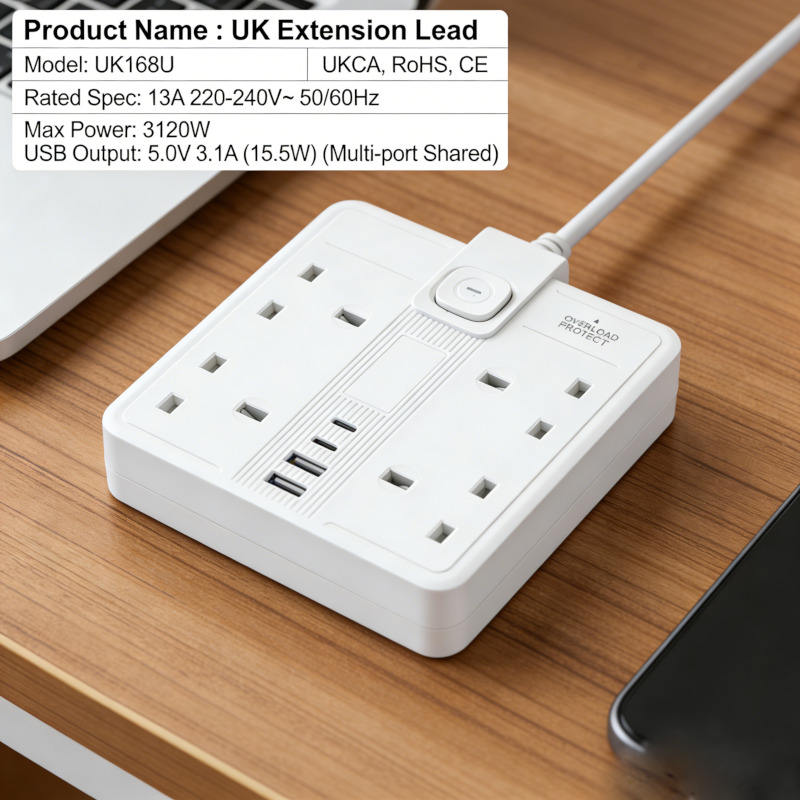
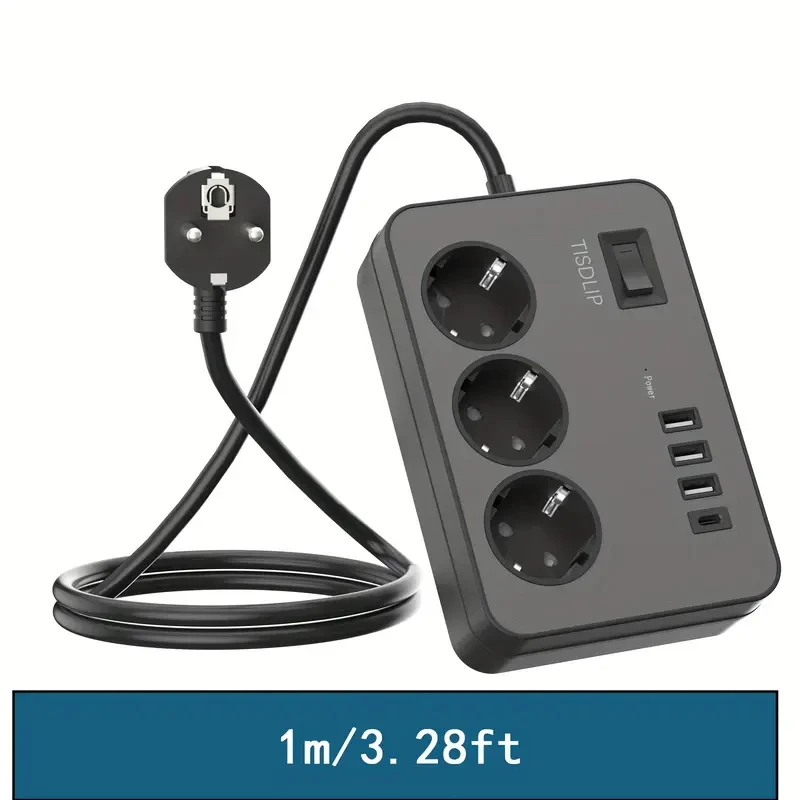
3. Multi-Outlet Convenience: Modern designs often include multiple sockets, USB-A/USB-C ports, individual switches, overload protection, and child safety shutters.
Limitations of Indoor Extension Cords (Avoid These Scenarios)
- High-Power Devices: Heaters, water heaters, air conditioners, hair dryers, or induction cookers (1500W) can cause overheating, melted plugs, or fire. Plug directly into wall outlets when possible.
- Damp Environments: Kitchens, balconies, laundry rooms, or near bathrooms — moisture can enter connections and cause leakage.
- Long-Term Fixed Use: Extension cords are intended for temporary use. Prolonged pressure, stepping, UV exposure, or temperature cycling accelerates aging.
Why Heavy Duty Extension Cord Handle Harsh Environments
- Thicker Insulation: SJTW, SJEOW, and H07RN-F rubber jackets provide excellent waterproofing, UV protection, abrasion resistance, oil resistance, and temperature tolerance.
- Superior Mechanical Strength: Undergo extensive testing (tensile, flex, drag, impact) to simulate real-world abuse like being dragged by lawn equipment or run over.
- Wider Temperature Range: PVC is typically 0°C–40°C; H07RN-F often handles -25°C–60°C or more, making it suitable for all-season outdoor use.
H05VV-F vs H07RN-F Comparison
| Comparison Item | H05VV-F | H07RN-F |
|---|---|---|
| Jacket Material | PVC | Rubber |
| Usage Environment | Indoor | Outdoor |
| Waterproofing | Fair | Excellent |
| Cold Resistance | Fair | Excellent |
| UV Resistance | Fair | Excellent |
| Power Tools | Not recommended | Recommended |
| Industrial Use | Not recommended | Recommended |
| Service Life | Standard | Longer |
Recommendation: For European markets or applications involving garden tools, construction equipment, or outdoor machinery, H07RN-F is the more reliable choice.
How to Choose the Right Extension Cord for Your Needs
- Living Room / Office: PVC indoor cord (10A–13A, 16 AWG); prefer models with overload protection and USB ports.
- Garden / Holiday Lights: SJTW or H07RN-F waterproof cords.
- Power Tools: 12 AWG, 15A+ heavy-duty rubber cords.
- Construction Sites: H07RN-F with industrial IP44 connectors.
- Long-Distance Power: Larger gauge outdoor cords.
5 Most Common Mistakes (TISDLIP Experience)
1. Buying excessively long cords (increases voltage drop and heat).
2. Daisy-chaining multiple extension cords (increases resistance and heat).
3. Using coiled cords while powered (traps heat, risking meltdown).
4. Covering cords with rugs or heavy objects long-term (blocks heat dissipation and causes damage).
5. Ignoring safety certification marks.
AWG vs mm² Quick Reference
| AWG | Approx. Cross-Section | Recommended Max Current | Typical Applications |
|---|---|---|---|
| 18 AWG | 0.82 mm² | 7A | Small electronics |
| 16 AWG | 1.31 mm² | 10–13A | Lighting, TVs |
| 14 AWG | 2.08 mm² | 15A | General household tools |
| 12 AWG | 3.31 mm² | 20A | Heavy-duty outdoor tools |
| 10 AWG | 5.26 mm² | 30A | Industrial equipment, generators |
Rule of Thumb: Higher power and longer distance require thicker wire.
Selecting by Device Power
- Phone Chargers / Lamps / TVs (300W): 16 AWG
- Vacuum Cleaners (800–1400W): 14 AWG
- Heaters / Saws (1500–1800W): 12 AWG
- Air Compressors (2000W+): 10 AWG
How Manufacturers Test Quality (TISDLIP Process)
High-quality cords undergo:
- Conductor resistance testing
- Insulation withstand voltage (Hi-Pot) testing
- Ground continuity testing
- Plug insertion/withdrawal life testing (5,000–10,000+ cycles)
- Flexing and bending life testing
Factories with in-house labs can accelerate development and certification.
TISDLIP Professional Advice
Safety comes not only from materials but from matching the right product to the right application. An excellent indoor cord is safe and reliable for desktop use but risky for outdoor power tools.
Conclusion
Indoor extension cords are designed for dry, low-power indoor environments. Outdoor extension cords are built for harsh conditions. Choose the correct type according to your needs + use it properly = truly reliable power solution.
Looking for a Reliable Extension Cord Manufacturer?
TISDLIP specializes in AC power cords, extension cords, power strips, and OEM/ODM solutions for over 20 years. Our engineering team is ready to support your market-specific requirements. Contact us for tailored solutions and samples.
FAQ: Common Questions About Indoor vs Outdoor Extension Cords
Q1: Can indoor extension cords be used outdoors temporarily?
Not recommended. Even short-term use exposes them to rain, moisture, UV, and temperature changes.
Q2: Are all outdoor extension cords fully waterproof?
Not necessarily for prolonged submersion. Avoid standing water, protect connections, and use waterproof enclosures.
Q3: Can 16 AWG cords power electric tools?
Suitable for light loads only. Use 14 AWG or 12 AWG for saws, drills, or pressure washers.
Q4: Why is H07RN-F suitable for outdoor use?
Its rubber jacket offers superior cold resistance, mechanical strength, oil resistance, and weatherproofing — ideal for construction and outdoor machinery.
Q5: Is thicker always better?
No. Match gauge to power requirements and length to avoid unnecessary cost and weight.
Q6: Why shouldn't multiple extension cords be connected?
Extra connection points increase resistance, voltage drop, and heat, reducing safety.
Q7: Can outdoor cords stay outside permanently?
Not ideal. Retrieve after use, avoid prolonged direct sunlight, and keep plugs dry to extend lifespan.
Q8: What is the most important factor when buying?
Conductor gauge, rated current, jacket material, and safety certifications — not just price.
References:
1. National Fire Protection Association (NFPA)
2. Occupational Safety and Health Administration (OSHA)
3. U.S. Consumer Product Safety Commission (CPSC)
4. UL Solutions
5. Electrical Safety Foundation International (ESFI)
6. International Electrotechnical Commission (IEC)
7. European Committee for Electrotechnical Standardization (CENELEC)



 Email
Email